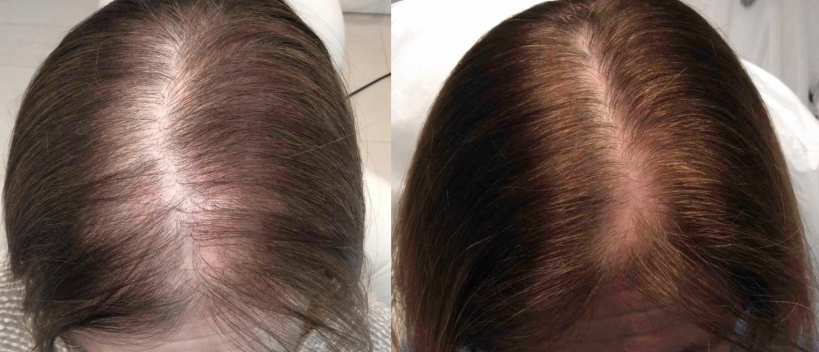
What is PRP
Platelet-rich plasma (PRP) is a non-surgical procedure for hair regrowth, best used for treating thinning hair and slowing or stopping the progression of hair loss. Losing your hair can be a hugely distressing thing to go through and it can have an impact on your self-esteem.
PRP treatment can tackle both male/female pattern baldness and alopecia as it encourages the growth of existing hair follicles, making your hair appear fuller and healthier without resorting to surgery. It is therefore the most natural way to stimulate hair growth.
The PRP treatment does more than provide you with a naturally growing full head of hair; it helps to return your self-esteem and confidence.

PRP therapy works by injecting the patient’s own concentrated platelet-rich plasma into the hair follicles, which stimulates and reactivates dormant or weakened hair follicles to produce thicker and healthier hair.
The process begins with a simple blood draw from the patient’s arm; this is then placed in a centrifuge machine which separates the red blood cells from the plasma. The PRP is then injected into the scalp using a very fine needle, allowing the platelets to be delivered directly and efficiently to where they are needed.
Thanks to this process, hair follicles are nourished and stimulated in the scalp, resulting in an increase in blood flow to the area. PRP hair treatment typically requires a series of 2-3 treatments spaced 4-6 weeks apart, and results may vary from patient to patient, but all will be discussed during your initial hair loss consultation.
- Male/Female Pattern Baldness: PRP therapy is an effective treatment for both female and male pattern baldness, as it helps to stimulate and repair damaged hair follicles. We will need to assess the stage of pattern baldness you are at before we can decide on the best treatment plan for you.
- Menopause Hair Loss: PRP therapy has been shown to be a highly effective hair loss treatment for those suffering from menopause-related hair loss. The procedure helps to stimulate the scalp and repair damage caused by hormones, providing thicker, fuller hair.
- Post-Hair Transplant Stimulation: After getting a hair transplant, we use PRP therapy to stimulate the newly transplanted hair follicles. This helps to shorten the healing time and increase the rate of successful grafts.
- Thinning Hair: PRP therapy is an effective treatment for thinning hair, with many patients seeing significant improvements in their condition after receiving the treatment. PRP is a better option if you have thinning hair rather than going for an invasive hair transplant surgery.
- Alopecia: This is the general medical term for hair loss and can affect men, women and children. The causes of alopecia vary, from hereditary, to reactions to certain medications or an underlying medical condition. PRP therapy can be used to treat alopecia sufferers and have seen significant improvements in the thickness and growth of hair.
- PRP is prepared from an extract of your own blood.
- PRP treatment will commonly last between 30 minutes and 60 minutes
- To do this, 30 – 60 ml of blood is drawn from your arm.
- The blood is then placed in a centrifuge. The centrifuge spins and separates the platelets from the rest of the blood components.
- 3 – 6 ml of platelet-rich plasma will then be extracted.
- The concentrated and growth factor-concentrated platelets are injected into the scalp via micro injections.
There is no downtime for PRP so you can immediately return to your normal daily routine. It is recommended that strenuous activity and alcohol consumption is be avoided for 24 hours post procedure.
The results of PRP can usually be seen between two to three months post treatment. Depending on your type of hair loss, and the extent of the loss, PRP for hair restoration is usually recommended as a course of 3 to 6 treatments spaced 4-6 weeks apart. Then depending on your individual needs, a maintenance session once a year is usual.
The number of treatments you need depends on the condition and severity of your hair loss. Generally, it is recommended that patients receive three treatments spaced 4-8 weeks apart. After the initial course of treatments, some patients may require maintenance treatments every 6-12 months in order to maintain the desired results
Results will vary from person to person, however, the majority of patients see visible results after the first or second treatment.
PRP hair loss treatment results can last up to 12-24 months after the initial treatment course; however, some patients may need regular top-up treatments.